If you are wondering how to choose a Shopify agency for a fashion brand in Dubai, look beyond quotations and attractive website designs. Fashion e-commerce has specific requirements, including visual merchandising, product variants, size selection, mobile shopping and frequent collection updates.
The right agency should understand how fashion customers discover, compare, and purchase products online. Look for relevant industry experience, design capabilities, UAE market knowledge, technical expertise, and dependable post-launch support.
Why Fashion Brands Need the Right Shopify Partner
Fashion customers cannot physically touch, try on, or compare products when shopping online. Your website must therefore communicate the quality, fit, colour, and style of each product clearly.
An experienced Shopify agency in Dubai can turn these requirements into a smooth digital shopping experience. The agency should understand how branding, technology, and e-commerce operations work together instead of treating the project as a basic website setup.
An impressive design is valuable, but appearance alone will not generate sales. Customers must also be able to find products, select the right variants and complete their purchases without unnecessary difficulty.
Review Relevant Fashion E-commerce Work
Before selecting an agency, review its completed projects in fashion, footwear, jewellery or lifestyle retail. These businesses often require strong visual merchandising, flexible product options, clear catalogue organisation and frequent collection updates.
Live websites provide better evidence of an agency’s capabilities than promotional claims or design mock-ups. Check how products are presented, how easily customers can browse collections and whether the store performs well across mobile and desktop devices.
Case Study: Da Milano UAE
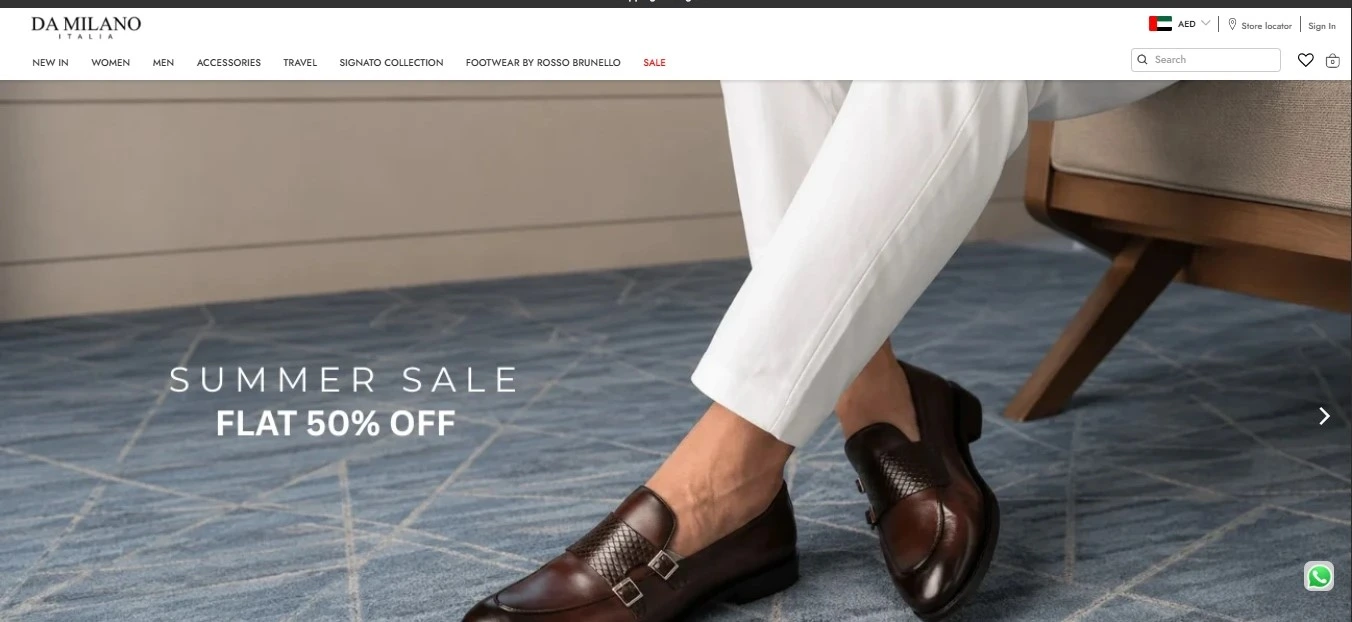
The store, showcased in the company’s project portfolio, arranges its extensive catalogue into clear categories, making it easier for customers to find relevant collections and products without navigating through a complicated menu.
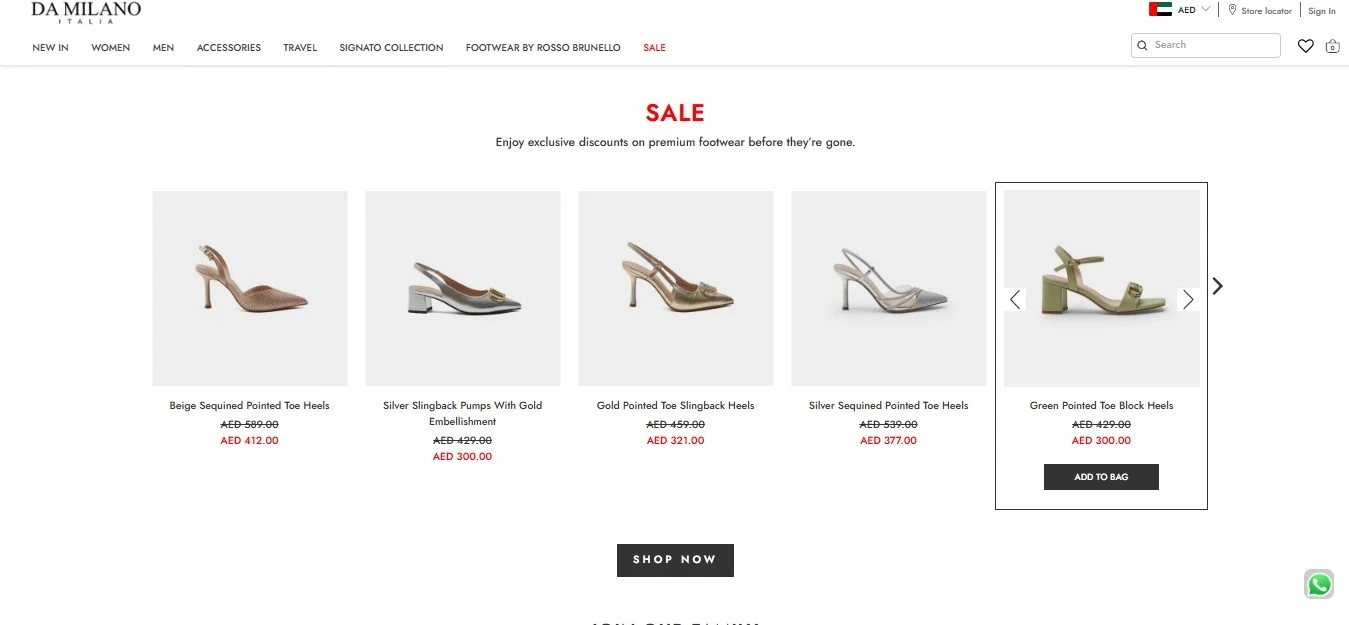
Large product images and informative descriptions allow shoppers to examine materials, colours and design details more closely. The responsive layout also supports a consistent browsing experience across mobile and desktop devices.
Da Milano is also included in a review of successful Shopify stores in the UAE, highlighting its simple navigation, strong product presentation and mobile-friendly shopping experience.
Evaluate Design and Branding Capabilities
Fashion is strongly influenced by visual identity. Typography, photography, colours, spacing and page layouts all shape how customers perceive a brand.
A good Shopify designer should begin by learning about your target audience, brand position and product range. A luxury leather brand, for example, requires a different visual approach from an affordable streetwear business.
Ask how the design team will translate your existing identity into an online store. The design should feel distinctive while keeping navigation and purchasing simple.
Th right Shopify design and build partner can turn that visual identity into a professionally built store that is easy to use and performs reliably across devices.
Check How Product Variants Will Be Managed
Fashion catalogues can quickly become complicated. A single product might be available in several sizes, colours, materials or styles. Customers must be able to understand these options without feeling overwhelmed.
The development team should explain how it will organise the following:
- Size and colour variants
- Product swatches
- Size guides
- Stock availability
- Related products
- Complete-the-look recommendations
- Back-in-stock notifications
Customers should not have to select a size and colour only to discover later that the combination is unavailable.
Your team should also be able to add products, update collections and manage inventory after launch. Routine catalogue management should not always require help from a developer.
Prioritise the Mobile Shopping Experience
Many fashion customers discover products through Instagram, TikTok, Google or influencer content before opening the store on their phones. Mobile usability must therefore be a central part of the project.
The mobile experience should include clear menus, readable text, touch-friendly buttons and fast product browsing. Images must remain sharp without making pages unnecessarily slow.
Ask how the team tests the store on different devices and browsers. Every step should work smoothly, from browsing products and choosing options to completing payment and receiving an order confirmation.
Look for UAE and GCC market knowledge.
A technically capable international agency may still struggle with local e-commerce requirements. Dubai fashion businesses often need payment, delivery and language options designed for customers across the UAE and GCC.
A suitable provider should understand the following:
- UAE-compatible payment gateways
- Cash-on-delivery processes
- Buy Now, Pay Later services
- VAT configuration
- Regional shipping providers
- Arabic and English storefronts
- Right-to-left Arabic layouts
- Multi-currency selling
- Local return expectations
Ask shortlisted teams which UAE payment gateways, courier systems and regional applications they have previously integrated. You can also review the company’s Shopify experience and background before making a decision.
Discuss Integrations and Custom Development
Fashion businesses often rely on external tools for inventory, accounting, marketing, customer relationships and order fulfilment. These systems must exchange information with Shopify accurately.
Prepare a list of your existing tools before contacting an agency. Ask whether the proposed Shopify development services include integration planning, testing and documentation.
Common integration requirements include:
- ERP or inventory software
- Point-of-sale systems
- Email marketing platforms
- Loyalty programmes
- Review applications
- Shipping providers
- Accounting tools
- Social-commerce channels
The agency should explain when an existing Shopify app is sufficient and when custom development is justified. Installing too many applications can increase recurring expenses and create maintenance issues.
Understand the Working Process
A dependable Shopify web development service should follow a clearly defined process. You should know what information is required, who is responsible for each stage and how progress will be communicated.
Ask about discovery, planning, design approval, theme development, product migration, integration testing, staff training and launch support.
Clear deliverables reduce misunderstandings about features, deadlines and responsibilities. Be cautious if an agency provides a final quotation without first understanding your catalogue, integrations, design expectations and business objectives.
Ask About Support After Launch
Launching the website is not the end of the project. Fashion stores regularly introduce new collections, campaigns, discounts and seasonal landing pages.
Ask whether the agency provides continued support for:
- Theme updates
- Bug fixes
- Performance monitoring
- App conflicts
- Conversion improvements
- New landing pages
- Integration maintenance
- Peak-season preparation
You should also confirm how support requests are submitted and how urgent issues are handled. A clear support arrangement can prevent small technical problems from interrupting sales.
Compare the Price and Scope of Each Proposal
For example, when comparing an AED 5,000 proposal with one costing AED 15,000, check what each includes. A lower quote may exclude custom design, integrations, testing or post-launch support, leading to additional expenses later. Choose based on the complete value offered, not the initial price alone.
Questions to Ask Before Selecting an Agency
Before making your final decision, ask:
- Have you developed Shopify stores for fashion or lifestyle brands?
- Can you show relevant live projects?
- How will you manage sizes, colours and product variants?
- Do you provide custom mobile-first design?
- Which UAE payment and delivery systems have you integrated?
- Can you build an Arabic and English storefront?
- How will our team manage products after launch?
- What testing will be completed?
- What post-launch support is available?
- Who will be our main point of contact?
Clear answers will help you compare agencies using evidence instead of relying on promotional promises.
Conclusion
Choosing a Shopify agency for a fashion brand in Dubai requires a balance of creative design, technical capability and regional e-commerce knowledge. The right team should understand how fashion customers browse collections, compare product variants and make purchasing decisions across mobile and desktop devices.
Review relevant projects, ask detailed questions, and ensure the agency understands your operations as well as your visual identity. Da Milano UAE offers a practical example of this experience.
MAQ Computer Services LLC provides Shopify design, development, and ongoing support across Dubai and the GCC. Fashion brands planning a new store or redesign can contact the team to discuss their goals
Visit the official website: MAQ Computer Services LLC
Call us: +971 50 708 0116 (WhatsApp) | +971 55 494 3599
Office: Office No. 35, 19th Floor, The Binary Tower by Omniyat, Marasi Dr, Business Bay, Dubai
FAQ
1. How do I choose a Shopify agency in Dubai?
Choose a team with relevant fashion projects, UAE market knowledge, transparent pricing, a clear development process and dependable post-launch support.
2. Is Shopify suitable for clothing and fashion brands?
Yes, Shopify supports product variants, size options, organised collections, mobile shopping and integrations that clothing and fashion businesses commonly require.
3. What are the benefits of hiring a Shopify agency?
A Shopify agency can provide professional design, custom development, regional integrations, testing and continued technical support for your online store.
4. Is Shopify popular among businesses in the UAE?
Yes, businesses in the UAE use Shopify because it is manageable, scalable and compatible with many regional payment, delivery and marketing tools.