Wholesale commerce is rapidly shifting online, and many UAE companies are exploring digital platforms to manage bulk sales more efficiently. But before launching a wholesale e-commerce store, understanding the shopify b2b features available can make a significant difference in scalability and operations. Could the right e-commerce platform simplify pricing, ordering, and customer management for your wholesale business?
In the UAE’s competitive e-commerce market, choosing the right shopify b2b platform requires careful planning and a clear understanding of available tools. Business owners often evaluate features like custom pricing, company accounts, and bulk ordering before launching a shopify b2b store. In this guide, insights gathered by MAQ Computer Services LLC help explain the capabilities, challenges, and opportunities businesses should consider when building a wholesale Shopify store.
What is Shopify B2B
Shopify B2B refers to a dedicated set of native features within Shopify that allow merchants to sell directly to other businesses rather than only individual consumers. Unlike a typical retail ecommerce store, a Shopify B2B setup is designed for wholesale buyers who require account-specific pricing, bulk ordering options, flexible payment terms, and restricted or gated product catalogs tailored to their company accounts.
Why Choose Shopify for B2B?
Many e-commerce platforms claim to support wholesale operations, but Shopify has developed into a reliable B2B platform with features designed for modern businesses. One major advantage is its scalability, allowing companies to manage both Shopify B2B wholesale and B2C sales within the same ecosystem without maintaining separate systems. The platform also offers strong integration capabilities through the Shopify B2B API, enabling businesses to connect their store with ERP, inventory, and accounting tools for smoother operations.
Shopify further supports flexible storefront design through specialised Shopify B2B theme options that improve navigation and purchasing for wholesale buyers. Businesses can also enhance store functionality by using a Shopify B2B app to add tools like minimum order quantities, automated discounts, and wholesale registration workflows.
Key Advantages of Shopify for B2B :
- Manage wholesale and retail sales from a single ecommerce platform
- Scalable infrastructure that supports business growth
- Seamless integration with ERP, CRM, and inventory systems
- Customisable store design tailored for wholesale purchasing
- Ability to extend features through specialised apps
- Simplified wholesale ordering and customer-specific pricing
Key Shopify B2B Features Businesses Should Know
Understanding the core shopify b2b features helps business owners build a scalable and efficient wholesale ecommerce system.
Company Accounts
One of the most powerful features is the ability to create company accounts. These accounts allow multiple buyers from the same organisation to access a single purchasing profile. Businesses can assign roles, permissions, and ordering capabilities for each user within a company account. This makes it easier for procurement teams to manage purchases collaboratively. For wholesale operations in the UAE, company accounts simplify account management and improve buyer experience.
Custom Pricing and Catalogs
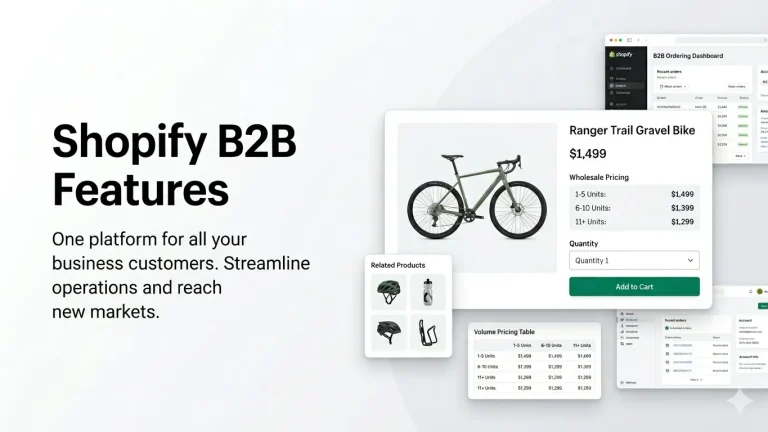
Wholesale businesses often need to offer different prices to different buyers. Merchants can create company accounts to manage wholesale buyers more efficiently. With this functionality, a shopify b2b solution can provide exclusive catalogs to distributors or wholesale partners. Each buyer sees only the products and pricing relevant to them. This approach ensures consistent pricing strategies while maintaining flexibility across different markets.
Flexible Payment Terms
Wholesale buyers typically do not pay instantly like retail customers. Flexible payment terms such as Net 15, Net 30, or Net 60 are supported, aligning with common B2B practices. As a result, clients can place orders and settle payments later based on agreed conditions. This approach helps maintain strong relationships with long-term buyers while improving cash flow flexibility. Companies transitioning from manual wholesale processes will also notice a significant boost in operational efficiency.
Bulk Ordering and Quick Reordering
Bulk ordering is essential for wholesale buyers who regularly purchase large quantities. These ordering tools allow customers to quickly place repeat purchases without adding items individually. Previous orders can also be reordered in just a few clicks, reducing manual product selection. This reduces friction and improves the overall customer experience. For distributors managing large inventories, this feature is particularly valuable.
API and Integration Capabilities
Through the Shopify B2B API, businesses can connect Shopify with external systems such as:
- ERP platforms
- warehouse management tools
- CRM systems
- accounting software
Initially, Shopify introduced its native B2B functionality as part of the Shopify Plus offering, but as of April 2026, several important B2B features have also been extended to non-Plus plans. This expansion allows more businesses to manage wholesale customers, create custom catalogs, and streamline B2B transactions within the same Shopify store, making it easier for brands to handle both B2B and B2C sales on a single platform.
Shopify B2B New Features (Latest Update)
One of the most significant developments for businesses considering Shopify as a B2B platform came in April 2026, when Shopify announced that key B2B features are now available on non-Plus plans, including Basic, Grow, and Advanced. Previously, accessing native B2B functionality required a Shopify Plus subscription, which carries a substantially higher monthly cost. This update significantly changes the economics of building a wholesale Shopify store.
Some of the most notable improvements include:
- Expanded B2B Access for Standard Plans: Several native B2B tools are now available on non-Plus plans, making it possible to start wholesale operations without upgrading to an enterprise subscription.
- Improved Company Account Management: Merchants can create and manage company profiles more efficiently, with better control over permissions, orders, and purchasing access.
- Advanced Catalog and Pricing Control: Custom product catalogs and buyer-specific pricing structures can now be configured with greater flexibility, including volume-based discounts.
- Flexible Payment Terms: Payment options such as Net 7, Net 30, or Net 60 can be assigned to different wholesale customers based on agreements.
- Streamlined B2B Ordering Experience: Features like quick reorders, customer accounts, and customisable checkout flows help improve efficiency and enhance the overall buying experience.
For businesses in markets like the UAE exploring wholesale e-commerce, these updates significantly strengthen the Shopify B2B.
Common Challenges When Running B2B on Shopify
While Shopify offers powerful tools, businesses may still encounter operational challenges when launching a shopify b2b store.
Managing Complex Pricing Structures
Wholesale pricing can vary based on quantity, region, and client agreements. Without proper configuration, maintaining consistent pricing can become difficult. Businesses often solve this issue by implementing automated price lists and wholesale discount structures.
Handling Large Product Catalogs
Wholesale stores frequently contain thousands of products and variants. Organizing these catalogs effectively is essential for buyer usability. Using structured product categories and custom collections can improve navigation within the store.
Integrating External Systems
Many wholesalers rely on ERP systems to manage inventory and orders. Integrating these systems with Shopify requires technical planning and API development. This is where expert support for Shopify development can streamline the process.
Managing Wholesale Customer Access
Wholesale stores must restrict access only to approved buyers. Without proper account management systems, unauthorised customers may view wholesale pricing. Setting up account approval workflows ensures that only verified businesses can access wholesale catalogs.
Solutions for Managing B2B Stores Efficiently
Businesses can overcome many B2B ecommerce challenges by implementing the right strategies during the store development stage. Choosing suitable tools, integrations, and store architecture significantly improves efficiency and scalability. For those interested in professional Shopify development services, available solutions can be explored here:
Key Solutions
- A specialised Shopify B2B theme helps enable bulk ordering and simplifies wholesale navigation.
- Automation tools can handle discounts, order approvals, and tiered pricing efficiently.
- Seamless integration with ERP, inventory, and accounting systems is possible through the Shopify B2B API.
- Customer-specific catalogues and pricing allow tailored experiences for different wholesale buyers.
- Long-term scalability can be achieved by working with experienced Shopify development experts.
Why Businesses in the UAE Choose Shopify for Wholesale
The UAE is home to a diverse trading economy — from FMCG distributors in Sharjah to luxury goods wholesalers in Dubai and manufacturing suppliers across Abu Dhabi. Across these sectors, several consistent themes drive the preference for Shopify as a B2B platform.
- Reliability and uptime matter enormously when trade buyers are placing high-value orders. Shopify’s infrastructure handles this without requiring businesses to manage their own hosting or security.
- Multilingual and multi-currency support is increasingly important for UAE businesses serving buyers across the GCC. Shopify Markets handles localisation reasonably well, though complex regional configurations may require additional development work.
- Speed to market is another key factor. Compared to building a B2B ecommerce solution on a fully custom stack, Shopify dramatically reduces the time from decision to launch, which is valuable in a competitive trading environment.
Shopify case studies from across the region consistently highlight these advantages, alongside the ability to manage wholesale and retail channels from a single platform without duplicating product data or inventory management.
Conclusion
Launching a wholesale ecommerce platform requires careful planning, the right technology, and a clear understanding of operational needs. By leveraging modern shopify b2b features, businesses can streamline ordering processes, personalise pricing for clients, and scale their wholesale operations efficiently.
With the introduction of Shopify B2B without Plus, Shopify has made advanced wholesale capabilities more accessible to growing companies. This shift allows startups and established businesses alike to explore B2B ecommerce without the complexity traditionally associated with enterprise platforms.
Ready to Build Your Wholesale Store with Shopify B2B Features?
Ready to unlock the power of shopify b2b features and build a scalable wholesale ecommerce store for your business? The Shopify experts at MAQ Computer Services LLC help UAE businesses design, develop, and optimise advanced Shopify B2B stores tailored to their operational needs. If you’re planning to launch a wholesale ecommerce platform, you can request a Shopify Quote or speak with experienced Shopify specialists today.
| Contact MAQ Computer Services LLC Official Shopify Partner — UAE Phone: +971 55 494 3599 | +971 50 708 0116 Email: info@maquae.com Visit the official website: MAQ Computer Services LLC |
FAQs
What is the B2B function of Shopify?
The B2B function of Shopify allows businesses to sell products directly to other businesses instead of individual consumers. It includes features like company accounts, custom pricing, bulk ordering, and flexible payment terms.
Is Shopify good for B2B?
Yes, Shopify has become a strong platform for B2B ecommerce. With tools such as custom catalogs, API integrations, and wholesale ordering features, businesses can manage large-scale transactions efficiently.
What are the 4 types of B2B marketing?
The four main types of B2B marketing include:
- Institutional marketing (business to institutions such as schools or hospitals)
- Producer marketing (manufacturer to distributor)
- Reseller marketing (wholesaler to retailer)
- Government marketing (business to government)
Is Shopify B2B or B2C?
Shopify supports both B2B and B2C ecommerce. Businesses can sell directly to customers (B2C) and also manage wholesale or business buyers (B2B) on the same platform.
Does Shopify Support Wholesale?
Yes, Shopify supports wholesale selling with features like custom pricing, bulk ordering, company accounts, and separate catalogs for B2B customers.