
Understanding the Google Universal Commerce Protocol and Its Impact on E-Commerce
TLDR: The Universal Commerce Protocol (UCP) is revolutionizing e-commerce by enabling AI agents to interact directly with online stores. This blog post explains how UCP standardizes data exchange, enhances customer experience, and why businesses must adapt to remain competitive in the AI-driven market.
The landscape of e-commerce is undergoing a significant transformation, driven by advancements in artificial intelligence (AI). As consumers increasingly turn to AI agents for shopping assistance, it is crucial for businesses to adapt to this new reality. This blog post delves into the Universal Commerce Protocol (UCP), a collaboration between Shopify and Google, which is set to redefine how online stores operate in an AI-driven world.
The Shift in E-Commerce
In recent times, there has been a noticeable decline in direct website visits as consumers prefer to interact with AI chatbots like ChatGPT or Google Gemini. For instance, when a customer requests assistance in finding a luxury perfume within a specific budget, the AI’s ability to facilitate the purchase directly is limited by the current e-commerce infrastructure. This is where UCP comes into play, promising to bridge the gap between AI and online retail.
What is the Universal Commerce Protocol (UCP)?
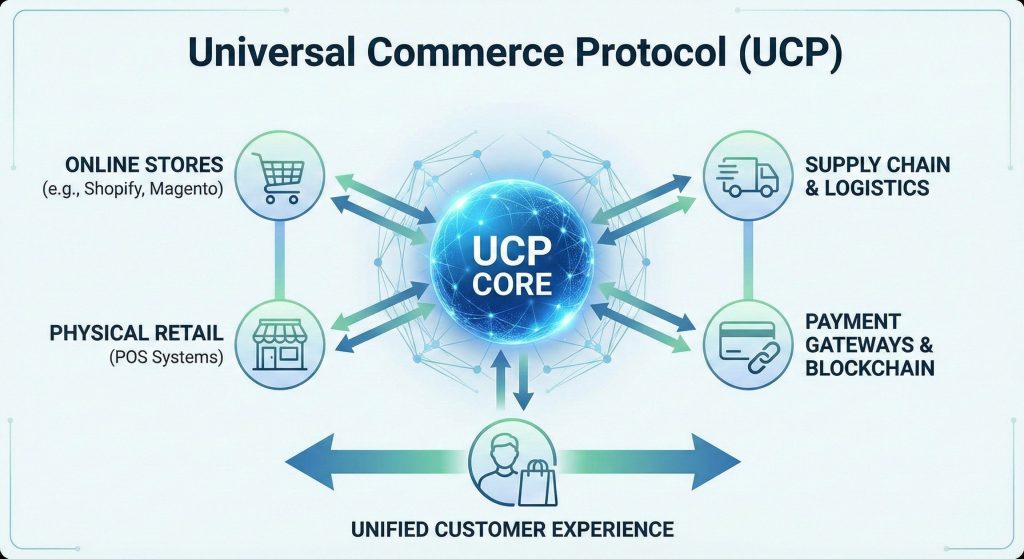
UCP stands for Universal Commerce Protocol, which can be likened to a translator for e-commerce. Currently, each online store communicates in its own unique way, making it challenging for AI to access product information, inventory levels, and pricing. UCP standardizes this communication, allowing AI agents to interact seamlessly with e-commerce platforms like Shopify.
Key Functions of UCP
UCP enables AI agents to perform three critical functions:
- Discover Products: AI can accurately identify what products are available in a store.
- Check Live Inventory: AI can verify stock availability in real-time, ensuring customers receive accurate information.
- Execute Checkouts: AI can facilitate the purchasing process without requiring human intervention on the website.
This standardized interface allows large language models (LLMs) to communicate directly with a store’s backend, eliminating the guesswork that previously hindered AI’s effectiveness.
The Role of Retrieval Augmented Generation (RAG)
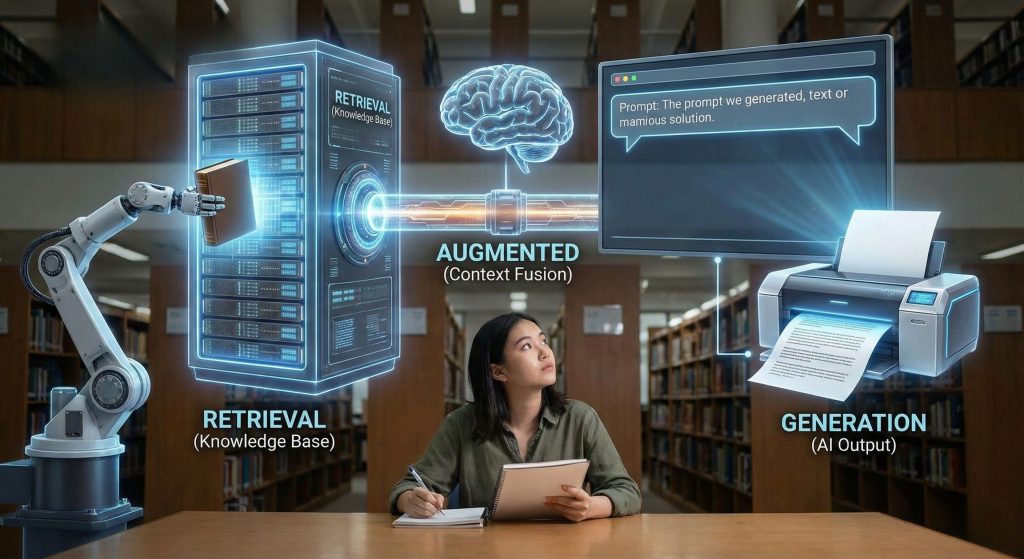
A crucial aspect of UCP is Retrieval Augmented Generation (RAG). When a customer queries an AI, it requires up-to-date information rather than relying on outdated training data. RAG allows the AI to fetch live data from a store, ensuring that customers receive accurate and timely responses. For example, if a customer inquires about a specific product’s availability, the AI can perform a real-time API call to confirm stock levels at a particular location.
The Consequences of Not Adopting UCP
If a store does not implement UCP, it risks becoming invisible to AI agents. In a competitive market, customers are likely to turn to competitors who provide the necessary transparency and accessibility. For instance, if an AI agent cannot easily navigate a store’s website to make a purchase, it will simply redirect the customer to a competitor that supports UCP.
The Importance of Trust and Reduced Friction
For businesses operating in regions like Riyadh and Dubai, understanding UCP is vital for two main reasons: trust and friction. Local payment methods can often complicate transactions, leading to customer frustration. UCP aims to standardize these processes, allowing AI agents to handle payments securely and efficiently, thus minimizing the risk of losing customers due to cumbersome checkout experiences.
The Future of AI in E-Commerce
Google and Shopify are currently rolling out UCP, which they refer to as “agentic store friends.” This initiative allows products to be discovered directly within Google search and AI modes, enabling transactions without requiring customers to visit the store’s website. As AI becomes more integrated into consumer decision-making, it will also play a pivotal role in facilitating transactions.
Imagine a scenario where a customer in Jeddah simply instructs their phone to order their usual coffee. If the store supports UCP, the AI can place the order instantly. Conversely, if it does not, the customer may choose a competitor that does.
Preparing for the Agentic Commerce Era
While Shopify provides the necessary infrastructure for UCP, the onus of maintaining data integrity falls on the business owner. Many stores struggle with unstructured data, broken variant logic, and missing JSON tags. If the data fed into UCP is flawed, AI agents will reject the store, leading to lost sales opportunities.
To thrive in this new era of agentic commerce, businesses must:
- Rearchitect their data
- Clean up legacy ERP connections
- Establish the right API infrastructure
This transition is complex and requires a deep understanding of the Shopify ecosystem. At our agency, we specialize in assisting GCC enterprise brands with this transformation, ensuring they are equipped to scale in the AI era.
Conclusion
As we move towards a future where AI agents will dominate the purchasing landscape, it is imperative for Shopify store owners to prepare for a zero-click future. By adopting UCP and ensuring their stores can communicate effectively with AI, businesses can capture sales that would otherwise be lost to competitors. The era of agentic commerce is upon us, and those who adapt will lead the market in the coming years. If you are an enterprise merchant in the GCC looking to position your brand for success in this new landscape, we are here to help you navigate the complexities of agentic e-commerce.
If you dont want to fall apart from AI Agentic World and looking for a Shopify AI Automation company in Dubai. Contact us :


![Must Have Shopify Apps in 2021 [FREE]](https://blog.expertsinshopify.com/wp-content/uploads/2021/02/custom-shopify-app-600x400.jpg)